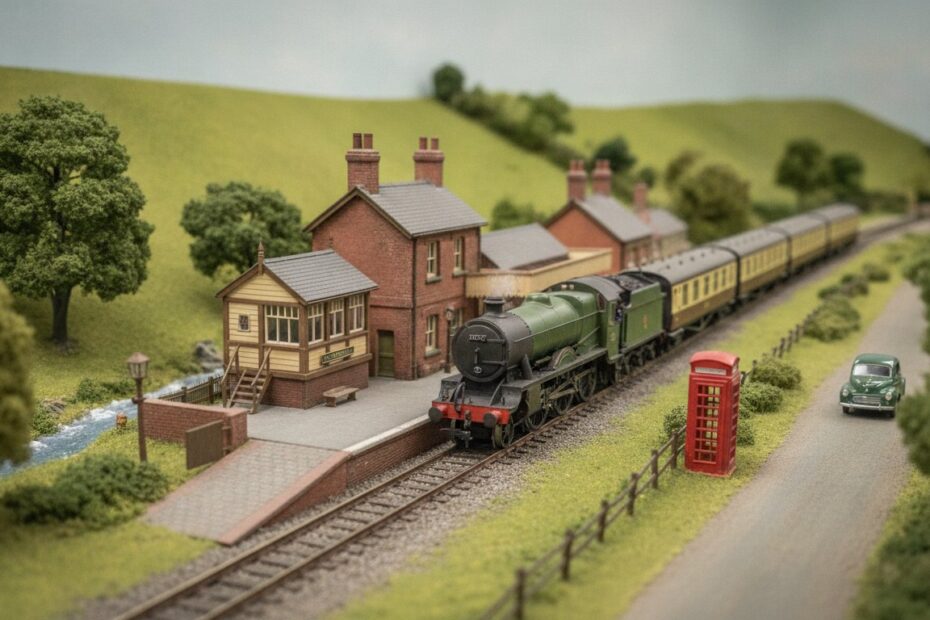
The most impressive model railway isn’t defined by the length of its track, but by the architectural story told through its model railway buildings. Most collectors have felt that pang of disappointment when a high-quality locomotive sits beside a kit that looks “toy-like” rather than realistic. It’s often difficult to find structures that perfectly match the heritage era of your favourite rolling stock, and handling the scale gap between 1:76 and 1:48 can easily break the immersion of a carefully crafted scene.
We understand that you want a layout that feels authentic and grounded. This guide will help you select, scale, and organise the perfect model railway buildings to transform your project into a living, breathing miniature world. You’ll learn how to blend buildings with railway accessories and Oxford Diecast pairings to create a visually stunning, scale-accurate environment that truly does justice to your collection.
Key Takeaways
- Define your layout’s era by selecting structures that provide the correct historical context for your rolling stock and locomotives.
- Compare the pros and cons of resin, card, and plastic model railway buildings to find the right balance between intricate detail and assembly time.
- Learn how to prioritise your budget by focusing on “Railway Essentials” like signal boxes and platforms before expanding into broader town scenery.
- Master the art of blending 1:76 scale structures with Oxford Diecast vehicles and railway accessories for a seamless, living landscape.
- Discover why sourcing from a specialist UK curator ensures your components are perfectly matched for scale accuracy and professional quality.
Why Model Railway Buildings are the Heart of Your Layouts Narrative
A locomotive without its surroundings is merely a machine on a track; it lacks a destination, a purpose, and a history. Choosing the right model railway buildings is the most effective way to anchor your layout in a specific time and place. For those seeking a comprehensive overview of railway modelling, it’s clear that the landscape is just as vital as the locomotives themselves. These structures, ranging from the humble lineside signal box to sprawling Victorian terraced houses, provide the essential context that transforms a collection of rolling stock into a believable world. Without them, even the most detailed Hornby locomotive can look out of place.
Buildings act as a visual shorthand for your layout’s era. If you’re running a regional steam service, a soot-stained engine shed or a timber-framed station building instantly confirms the period. Conversely, a modern concrete warehouse or a contemporary retail park identifies a “Modern Image” layout. This architectural narrative has a profound psychological impact. High levels of detail, such as weathered brickwork or realistic signage, convince the viewer’s eye that they’re looking at a real location rather than a miniature. It’s this transition from “toy-like” to “museum-quality” that defines the most successful layouts.
Setting the Scene: Urban vs Rural Layouts
The choice of architecture dictates the atmosphere of your miniature world. Urban centres thrive on density. Think industrial engine sheds, multi-storey warehouses, and rows of shops to create a busy, claustrophobic feel. Rural branch lines require a lighter touch. A single country station and a lonely signal box can evoke the peace of the British countryside. Mixing these structures helps create a lived-in feel, making it look as though people actually inhabit your scene.
The Role of Scale in Architectural Realism
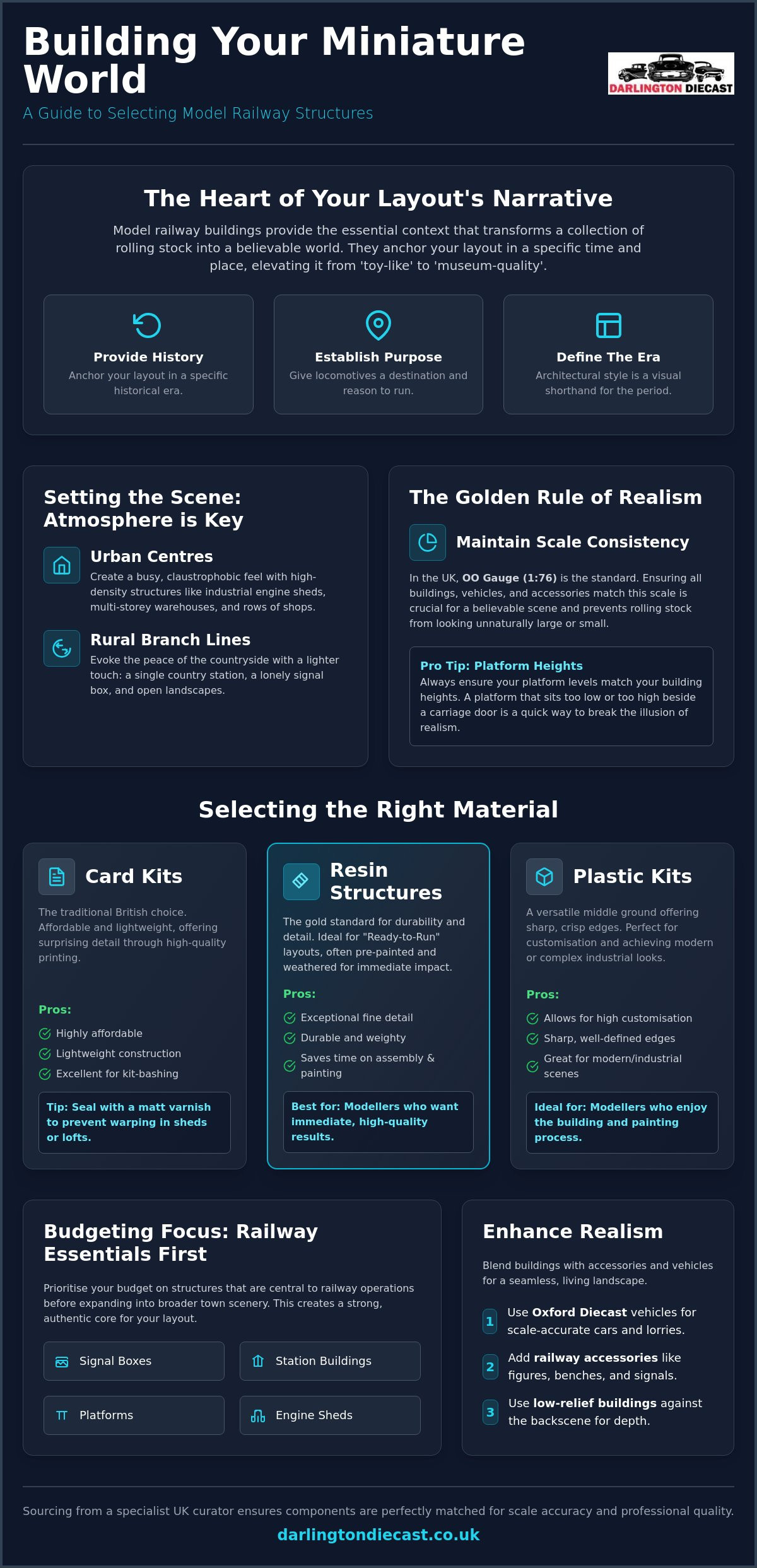
Scale consistency is the golden rule for any serious modeller. In the UK, OO Gauge (1:76) is the standard, particularly for those using Hornby train sets. Maintaining this scale across all your model railway buildings ensures that your rolling stock doesn’t look unnaturally large next to a doorway. Whilst N Gauge is an excellent choice for those with limited space, it requires strict attention to detail. Always ensure building heights match your platform levels. A platform that sits too low is a quick way to break the illusion of realism.
Selecting the Right Material: Card vs Resin vs Plastic
Choosing the right material for your model railway buildings depends on your budget, your available time, and the level of realism you want to achieve. By 2026, the industry has settled on three primary materials, each offering a distinct tactile experience and finish. If you have ever visited the National Railway Museum’s model railway, you will have noticed how professional layouts often mix these media to create depth. Resin offers weight and instant detail, whilst card and plastic provide the satisfaction of a bespoke build.
The choice often comes down to “Ready-to-Run” versus “Kits.” Ready-to-run resin structures are perfect for collectors who want to see immediate progress. These models are pre-painted and often weathered, saving you hours at the workbench. Kits, whether card or plastic, require more patience but allow for greater customisation. For those working with limited space, “low-relief” buildings are a fantastic solution. These thin-profile structures sit flush against your backscene, creating the illusion of a sprawling town or industrial estate without consuming precious track space.
Card Kits: The Traditional British Choice
Card kits, such as those from Metcalfe, remain a staple of the British hobby. They are affordable, lightweight, and offer a surprisingly high level of detail through clever printing techniques. Modern innovations in 2026 have introduced “pop-up” assembly designs, which significantly reduce the time spent cutting and scoring. To prevent warping in typical UK loft or shed environments, it’s a good idea to seal these models with a quick coat of matt varnish. This simple step protects the card and ensures your model railway buildings last for years.
Resin and Plastic: Durability and Depth
Resin structures are the gold standard for durability and weight. Their solid construction means they won’t budge if you accidentally nudge the layout, and they take paint exceptionally well if you decide to add your own weathering. Plastic kits offer a middle ground. They provide the sharp, crisp edges needed for modern industrial scenes or complex Victorian ironwork. When you browse our curated selection of railway accessories, you’ll find that mixing materials often produces the most natural-looking results. A heavy resin station house looks perfectly at home amongst a row of lighter plastic or card terraced cottages.
Must-Have Railway Building Categories for Every Era
Building a layout is a significant investment of both time and money. It’s tempting to fill every spare inch of your baseboard with various structures, but a cluttered scene often loses its sense of realism. To achieve a professional finish, you should prioritise your budget by focusing on “Railway Essentials” before expanding into general town scenery. These model railway buildings provide the functional logic for your track plan, explaining why your trains are stopping or where they are going. If you look at the incredible level of detail in Pendon Museum’s miniature dioramas, you’ll see that every structure has a specific purpose within the landscape.
The signal box is the operational nerve centre of any historic UK layout. It acts as a vital anchor point for your trackside, representing the complex safety systems of the real rail network. Beyond these larger structures, don’t overlook the impact of lineside huts. These small, affordable additions allow you to add intricate detail to narrow gaps between tracks without consuming significant space. They are perfect for housing track workers or storing tools, making your miniature world feel inhabited and busy.
The Railway Core: Stations, Sheds, and Signals
For most enthusiasts, the station building is the natural focal point of their Hornby train sets. It’s where the action happens and where your passengers “board” the coaches. To complement this, engine sheds are a necessity for storing and displaying your favourite locomotives when they aren’t in use. We also recommend incorporating water towers and signal boxes to add much-needed verticality to your layout. These taller structures break up flat horizons and create a more dynamic visual experience for anyone viewing your work.
Lineside and Industrial Structures
Freight operations require a reason to exist. Goods sheds and warehouses provide that purpose, giving your freight wagons a destination for loading and unloading. If you’re modelling the steam era, coal staithes and weighbridges are essential for an authentic depot aesthetic. These structures tell a story of heavy industry and manual labour. Finally, use bridges and tunnels to create realistic entry and exit points for your tracks. They provide a logical way for trains to “leave” the scene, which is far more effective than simply having the track disappear into a hole in the backscene. At Darlington Diecast Models Limited, we curate our selection of railway accessories to ensure you can find these specific, era-appropriate structures with ease.
Enhancing Realism with Railway Accessories and Die-cast Vehicles
Static structures provide the framework for your layout, but the soul of a miniature world lies in the smaller details. Once you’ve positioned your model railway buildings, the next step is to populate the space with life. Without figures, vehicles, and trackside clutter, even the most beautifully constructed station can feel like a ghost town. Integrating small railway accessories such as benches, lamp posts, and luggage trolleys creates a sense of purpose and movement. These additions bridge the gap between the rigid lines of the track and the organic flow of a lived-in environment.
The synergy between 1:76 scale buildings and Oxford Diecast vehicles is a cornerstone of realistic UK modelling. Because OO gauge railway equipment is built to this specific ratio, these die-cast models sit perfectly alongside your structures without the jarring scale discrepancies that ruin immersion. When placing vehicles, avoid perfectly straight lines. Parking a lorry at a slight angle in a goods yard or placing a car with its wheels turned near a station entrance suggests a world in motion. It’s these subtle choices that elevate a layout from a mere display to a believable snapshot of British life.
The Oxford Diecast Advantage
Precision is everything when you’re aiming for a professional finish. Using 1:76 scale Oxford Diecast models ensures that your vehicles don’t look like oversized toys next to your station doors. If you’re building a contemporary freight scene, industrial vehicles are essential. For inspiration on modernising a goods yard, see our guide to The Oxford Diecast Konecranes Reach Stacker. If your layout leans towards the nostalgic, a Corgi classic sports car models comparison reveals how a Jaguar XK120 adds a sophisticated touch of heritage to a station forecourt or a quiet village high street.
Detailing with Scenery and Figures
Modellers often talk about the “Three-Foot Rule.” This suggests that you should choose details that remain crisp and recognisable from a standard viewing distance of about one metre. Don’t over-clutter every corner; instead, focus on high-traffic areas like platforms. A few well-placed figures waiting for a train or a worker leaning against a signal box can speak volumes. To finish the look, use weathering powders on your model railway buildings. A light dusting of “sooty” black around chimney pots or “mossy” green near the foundations makes new kits look like they’ve stood the test of time and weather.
Ready to bring your scenes to life? Visit our online shop to explore our full range of Oxford Diecast vehicles and railway accessories.
Curation and Quality: Sourcing from Specialist UK Retailers
Sourcing your model railway buildings from a specialist like Darlington Diecast Models Limited ensures that every piece you buy is compatible with your existing layout. Generic toy shops often stock a mix of scales that don’t quite align, leading to a disjointed and “toy-like” appearance. A curated selection focuses on 1:76 scale accuracy. This means your buildings will look correct alongside your Hornby locomotives and Oxford Diecast vehicles. Planning a collection requires discipline. It’s better to have five high-quality, era-appropriate structures than twenty mismatched ones that clutter the scene. If you’re just starting, our guide on how to choose and set up Hornby model train sets is an excellent place to begin your journey.
A specialist retailer acts as a bridge between the large-scale manufacturer and the individual collector. We take pride in selecting items that we know will work together. This removes the guesswork for you, allowing you to focus on the creative side of the hobby. By choosing a retailer that understands the nuances of the UK rail network, you ensure that your station architecture matches the rolling stock you’ve spent years collecting. It’s this attention to detail that separates a casual hobbyist from a dedicated modeller.
Building a Collection for the Future
Investing in reputable brands like Hornby and Oxford Diecast isn’t just about aesthetics. These models tend to hold their resale value far better than generic kits. When you aren’t using a specific structure on your layout, proper storage is essential. Dust and sunlight are the enemies of resin and card. Many collectors are now moving towards integrated display solutions to keep their items safe whilst they aren’t on the track. For some creative ways to protect your investment, explore model railway display cabinet ideas for modern layouts.
Expert Advice and National UK Delivery
The true value of a specialist retailer lies in the conversation. We aren’t just shifting boxes; we’re enthusiasts who understand the nuances of the hobby. Whether you’re unsure if a specific goods shed fits your era or you need advice on the best adhesive for a card kit, we’re here to help. Our national UK delivery service is designed with the collector in mind. We use robust packaging to ensure delicate resin and card model railway buildings arrive in perfect condition, no matter where you are in the country. It’s a hassle-free way to expand your miniature world. We invite you to browse our latest 2026 arrivals in the Darlington Diecast Models Limited shop and find that perfect piece to complete your scene.
Bringing Your Miniature World to Life
Creating a realistic layout is a journey of careful curation rather than rapid expansion. By prioritising era-accurate model railway buildings and maintaining strict scale precision, you transform a simple track into a compelling piece of British history. Whether you are blending resin structures with card kits or integrating low-relief backdrops, the goal is always the same: to create a miniature world that feels grounded, authentic, and lived-in.
At Darlington Diecast Models Limited, we are more than just a retailer; we are a family-run business with genuine hobbyist enthusiasm. As proud specialist stockists of Hornby and Oxford Diecast, we ensure every item in our inventory meets the rigorous standards of the dedicated collector. We offer secure national UK delivery on all our model kits and accessories, ensuring your next project arrives safely at your door. Explore our curated range of Railway Accessories and Buildings today and find the perfect pieces to complete your scene. We look forward to helping you build the layout you have always imagined.
Frequently Asked Questions
What is the best scale for model railway buildings in the UK?
OO Gauge, or 1:76 scale, is the standard for the majority of UK layouts. It’s the scale used by Hornby and most major manufacturers, ensuring that your model railway buildings look correct alongside your locomotives. Whilst N gauge (1:148) is popular for smaller spaces, OO remains the preferred choice for those wanting the widest variety of kits and ready-to-run structures across the British market.
Can I mix different brands of railway buildings on one layout?
You can certainly mix different brands on a single layout, provided the scales match. Most UK modellers combine structures from various manufacturers to avoid a repetitive look. Mixing card kits with resin buildings often adds visual interest. Just ensure you check the scale compatibility, usually 1:76 for OO, to keep the scene looking believable and consistent across your entire trackside environment.
How do I make my model buildings look more realistic?
Weathering is the most effective way to make your buildings look realistic. Real structures aren’t perfectly clean, so adding a light dusting of weathering powders or a thin wash of dark paint can simulate years of soot and grime. Adding small details like posters, guttering, or interior lighting also helps. These tiny touches break the “plastic” look and give your scene a lived-in, authentic atmosphere.
What are low-relief buildings and when should I use them?
Low-relief buildings are “half-buildings” designed to sit flush against your backscene. They provide the appearance of a full structure whilst taking up only a fraction of the depth. These are perfect for creating dense urban backgrounds or industrial estates where space is limited. Use them to transition between your 3D scenery and a 2D painted backscene for a seamless and professional sense of depth.
Are card kits better than resin buildings for beginners?
Resin buildings are generally better for absolute beginners because they’re ready to use straight from the box. They require no assembly and are often pre-painted to a high standard. Card kits are more affordable and offer a great way to learn modelling skills, but they do require patience and steady hands. If you want immediate results, stick with resin; if you enjoy the build, try card.
Do Oxford Diecast vehicles fit with Hornby buildings?
Oxford Diecast vehicles are specifically designed to fit with Hornby layouts because both use the 1:76 scale. This ensures that a car parked next to a station entrance or a lorry in a goods yard looks perfectly proportional to the doors and platforms. This scale compatibility is why many collectors choose these two brands to create a unified and highly realistic miniature world for their collection.
How do I glue card model railway kits without making a mess?
To avoid a mess when building card kits, use a glue pen or apply adhesive with a cocktail stick. Applying glue directly from a large bottle often leads to spills and unsightly blobs that can warp the card. Use a fast-setting, clear-drying glue and apply it sparingly to the tabs. This methodical approach keeps your workspace clean and ensures the finished model looks professional, crisp, and free from sticky marks.
What era of buildings should I choose for a steam-engine layout?
For a steam-engine layout, look for Victorian or Edwardian architectural styles. These typically feature red brickwork, ornate timber gables, and stone detailing. Structures like traditional water towers, coaling stages, and timber-framed signal boxes are essential for this period. Choosing model railway buildings from the late 19th or early 20th century ensures your landscape perfectly complements your heritage locomotives and creates a historically accurate scene.