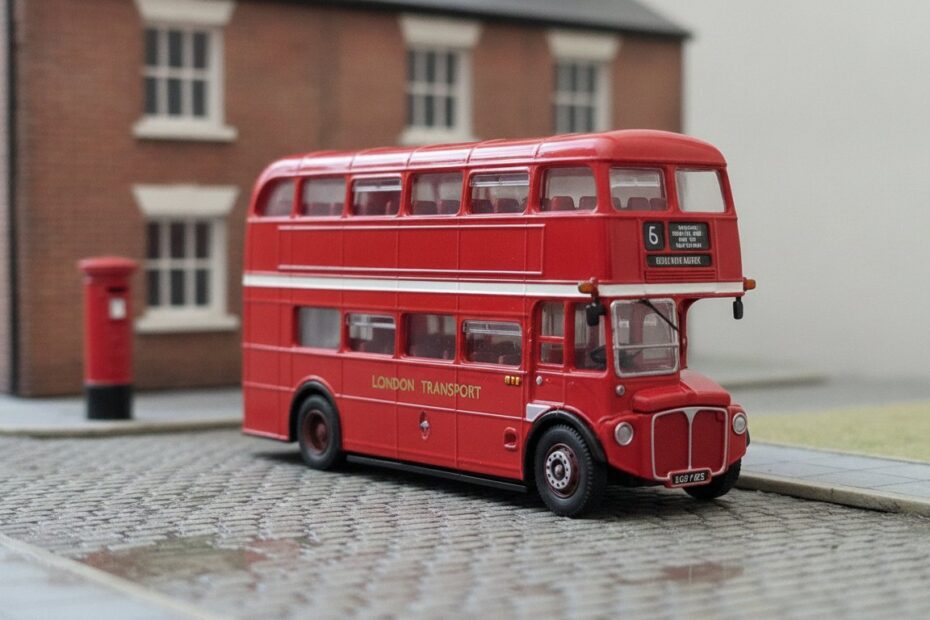
Can a meticulous replica really capture the heritage of a Leyland Leopard or the sleek lines of a modern Mercedes Tourismo? For the dedicated enthusiast, the answer lies in the tiny details, from authentic interior seating to the precise font on a destination board. Finding premium 1:76 scale bus models for sale that meet these standards is often the biggest challenge. You want a fleet that looks at home on a Hornby layout, yet many models fall short by offering toy-grade finishes instead of the high-fidelity realism your collection deserves.
It’s frustrating when you’re hunting for a specific regional livery only to find generic designs. We understand that every bus on your tracks should tell a story of a specific era and location. This guide promises to help you navigate the landscape of modern toolings and limited editions. You’ll learn how to distinguish collector-grade pieces from the rest and where to source the finest Oxford Diecast and Corgi releases. We’ll preview the most anticipated 2026 arrivals, including the new Leyland Leopard toolings, whilst sharing tips for showcasing your models with professional flair.
Key Takeaways
- Learn why the 1:76 scale is the definitive standard for British collectors and how it integrates seamlessly with Hornby OO gauge railway layouts.
- Compare the craftsmanship of leading manufacturers like Oxford Diecast and Corgi to identify the most authentic interior and exterior details for your fleet.
- Discover how to choose era-accurate liveries that reflect the heritage of regional operators, ensuring your collection remains historically consistent.
- Professionalise your maintenance routine with specialist tips on handling and cleaning delicate die-cast components without risking damage.
- Identify the most reliable ways to source 1:76 scale bus models for sale, prioritising curated specialist inventory over generic online marketplaces.
Understanding 1:76 Scale: Why OO Gauge is the UK Standard
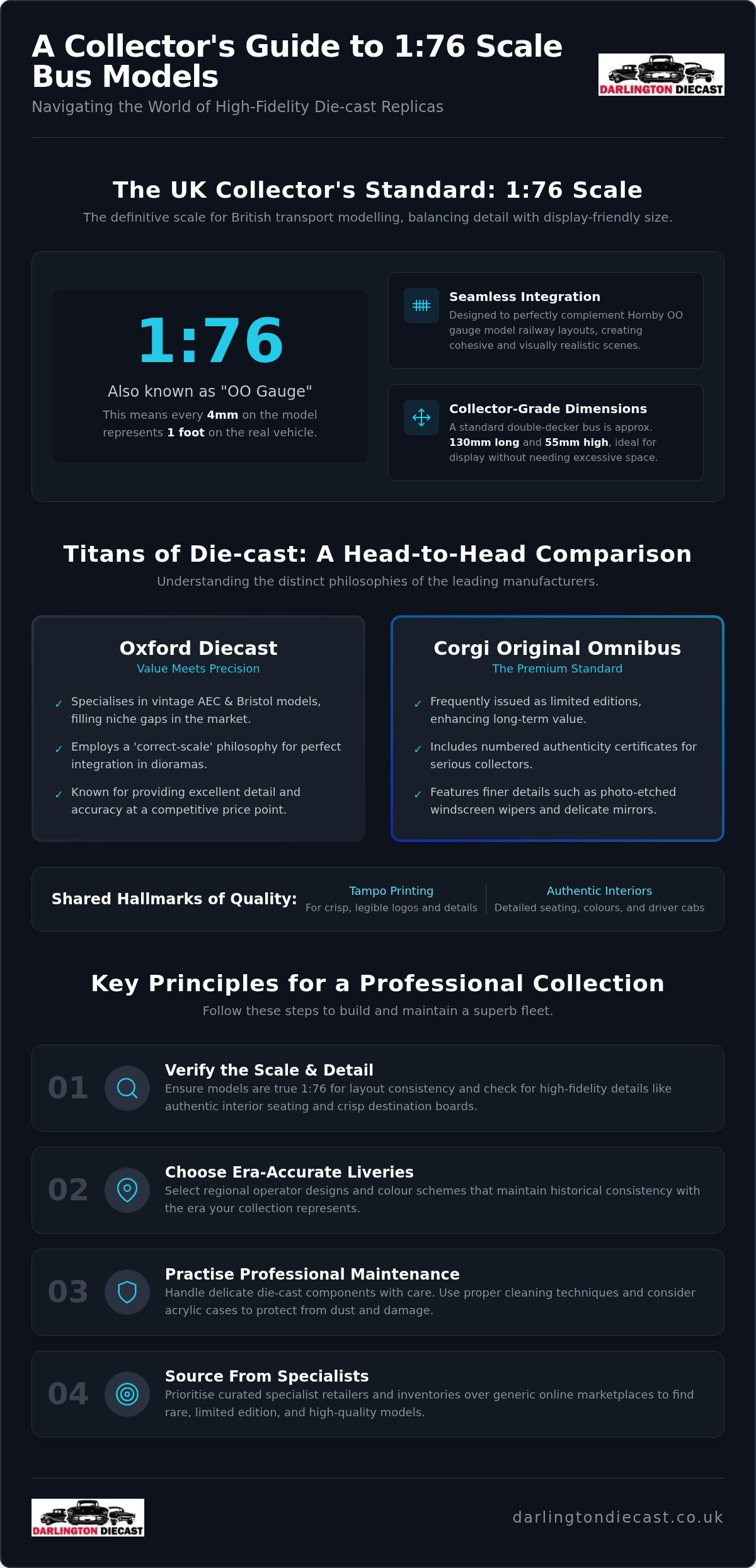
The 1:76 scale ratio is the heartbeat of British transport modelling. Often referred to as 4mm to the foot, it means every four millimetres on the model represents one foot on the real vehicle. Whilst international collectors often lean towards the larger 1:43 scale, the UK market is firmly rooted in 1:76. This dominance isn’t accidental; it’s driven by the massive popularity of OO gauge railways. If you are looking for 1:76 scale bus models for sale, you’re likely aiming for a size that fits comfortably in the palm of your hand yet retains enough surface area for crisp, legible printing.
Compatibility is the primary reason for this scale’s success. Most enthusiasts integrate their road vehicles with Hornby Model Train Sets, where the proportions must match perfectly to maintain the illusion of a living, breathing scene. A die-cast bus offers a weight and tactile quality that plastic kits simply can’t replicate. The cold feel of the metal and the satisfying weight of a well-crafted casting are hallmarks of a serious collection.
The History of the OO Scale Bus
Bus modelling has come a long way since the days of generic, brightly coloured toys. Manufacturers began to realise that collectors craved authenticity, leading to a shift towards specific regional liveries that reflected the actual fleets seen on British streets. This evolution allowed hobbyists to find models that matched their local history or a favourite childhood memory. The 1990s marked a turning point when the Corgi “Original Omnibus” range revolutionised the hobby by introducing high-fidelity castings with tampo-printed details. This era proved that 1:76 scale bus models for sale could be as detailed as any locomotive.
Space Requirements for 1:76 Displays
Planning your display is essential for a tidy collection. A standard 1:76 scale double-decker bus usually measures around 130mm in length and 55mm in height, making it easy to store dozens of models without needing a dedicated room. If you’re building a “bus garage” scene on a railway board, these models sit naturally alongside model railway buildings. You can organise a realistic depot by spacing vehicles about 40mm apart. This layout allows the fine details of the side liveries to remain visible whilst creating a sense of depth and activity in your miniature world.
Leading Manufacturers: Oxford Diecast vs Corgi Omnibus
Finding the right 1:76 scale bus models for sale often starts with a choice between the two titans of the industry. Whilst both brands share the same scale, their approach to casting and finishing differs significantly. Casting techniques have evolved from simple zinc-alloy shapes to complex moulds that capture the unique curves of a Bristol Lodekka or a modern Wrightbus. Just as museums dedicate resources to vintage bus preservation, these manufacturers aim to immortalise transport history in miniature form. The result is a tactile, heavy model that feels substantial in your hand and looks professional on your layout.
Detailing extends far beyond the exterior paint. High-quality models feature authentic interior seating colours and even tiny steering wheels in the driver cabs. A crucial element in this realism is “tampo printing.” This process allows for incredibly crisp logos, legal lettering, and destination boards that remain legible even under a magnifying glass. Packaging also plays a role in the collector’s experience; whilst some prefer the accessibility of window boxes, many serious hobbyists value the protection of acrylic cases and plinths that keep dust away from delicate mirrors.
Oxford Diecast: Value Meets Precision
The reputation of Oxford Diecast is built on a foundation of industrial and transport accuracy. They have become a favourite for those seeking vintage AEC and Bristol models, often filling gaps in the market that other brands overlook. Their “correct-scale” philosophy ensures that a bus doesn’t just look right on its own, but also sits perfectly alongside other vehicles and pedestrians on a layout. This commitment to proportion is why their range is so frequently used to populate realistic dioramas.
Corgi Original Omnibus: The Premium Standard
Collectors often view Corgi Original Omnibus (OOC) releases as the premium standard in the hobby. These models are frequently issued as limited editions, often accompanied by a numbered certificate that adds to their long-term value. You’ll notice finer details such as photo-etched wipers and separate plastic mirrors. They are built to last. The weight of a Corgi casting is particularly satisfying, providing a sense of quality that resonates with those who value the heritage of the brand. If you’re looking to enhance your collection, you can view our latest stock to find these exceptional pieces.
Matching the Era: Selecting the Right Livery for Your Layout
Achieving true realism on a model railway layout depends on chronological consistency. When you browse 1:76 scale bus models for sale, the first question should be whether the vehicle’s livery matches your locomotives. A common mistake is placing a 1970s National Bus Company vehicle alongside a pre-grouping steam engine. To avoid this “era-clash,” you must identify the correct period, such as the Big Four (1923 to 1947) or the early years of British Railways. Historical synchronicity makes the difference between a toy-like display and a professional diorama.
Regional liveries add another layer of authenticity. A London Transport red double-decker might look iconic, but if your layout represents the rolling hills of the West Country, a Western National green bus is far more appropriate. Similarly, the distinctive “plum and custard” of Midland Red can instantly transport your scene to the heart of the Midlands. Don’t overlook the importance of destination boards; a bus “bound for” a specific local town makes your miniature world feel interconnected and lived-in. These tiny details provide the narrative for your collection.
The Vintage Era (1930s – 1950s)
The vintage era is defined by classic half-cab designs, where the engine sits alongside the driver’s cab. Models like the Leyland Tiger or the Bristol K-type are essential for recreating the charm of a 1940s rural village. These buses often featured intricate pre-war liveries with gold leaf lettering and cream bands. To complete a high-end period diorama, these buses pair beautifully with Corgi classic sports car models, such as the Jaguar XK120. This combination captures the post-war transition period perfectly, whilst adding variety to your roadside scenery.
The Modern Era (1990s – Present)
Modern layouts require a shift towards low-floor accessibility and aerodynamic shapes. Models from Wrightbus or Alexander Dennis represent the contemporary British high street. The complexity of modern corporate liveries, like the bold colours of First Group or the swooping lines of Stagecoach and Arriva, brings a layout into the 21st century. Because bus companies update their branding frequently, these models serve as a precise timestamp for your layout. A Wright StreetDeck in a current regional livery can date your scene to a specific year, providing a level of accuracy that serious modellers prize.
Preservation and Display: Protecting Your 1:76 Fleet
Once you’ve found the perfect 1:76 scale bus models for sale, the focus shifts to long-term care. These aren’t just toys; they’re delicate historical records that require specific handling to maintain their value and appearance. Always pick up a model by the chassis rather than the roof. This avoids putting pressure on the plastic windows or the incredibly fragile mirrors. Wing mirrors are notorious for snapping under the slightest tension, so a “hands-off” approach is best once the model is positioned on your layout or shelf.
Dust is the enemy of fine detail, especially on destination boards and wipers. Avoid using household cloths which can snag and break small parts. Instead, use a soft-bristled makeup brush or a camera lens blower to dislodge particles safely. For stubborn dust in wheel arches, a canister of compressed air works well, provided you keep it at a safe distance to prevent freezing the paint surface with the propellant.
Sunlight is another silent threat to your collection. Direct UV rays will eventually fade vibrant liveries and cause clear plastic windows to turn yellow and brittle over time. Keep your display away from windows and heat sources. If you plan to sell your models in the future, keep every original box in a dry place. A model with its original “new old stock” packaging often commands a significantly higher price than a loose one on the secondary market.
Display Cabinet Solutions
While collectors meticulously maintain their miniatures, the real-world diesel buses and commercial vehicles they represent require professional upkeep; for those managing a full-scale fleet, Diego’s Shop offers expert servicing and warrantied repairs.
Finding rare 1:76 scale bus models for sale is only the first step; how you house them matters just as much. Wall-mounted glass cases are excellent for larger fleets, whilst individual acrylic boxes protect special limited editions from accidental knocks. You can explore various model railway display cabinet ideas to find a setup that fits your room. When lighting your buses, always choose LED strips. Unlike old-fashioned halogen bulbs, LEDs don’t emit heat, which prevents the die-cast metal from expanding and contracting.
Dealing with Paint Rash and Zinc Pest
Keep a close eye on older models for “paint rash,” which appears as tiny bubbles under the surface. This is often caused by moisture trapped during the manufacturing process or poor storage in damp environments. Zinc pest is a more serious chemical reaction that leads to the metal cracking or crumbling due to impurities in the alloy. Maintaining a stable temperature and low humidity in your hobby room is the most effective way to prolong the life of your models.
Protect your investment by starting with a quality model; view our latest curated arrivals to find your next fleet addition.
Where to Find Rare 1:76 Scale Bus Models for Sale
Finding the right 1:76 scale bus models for sale can be a daunting task if you rely solely on generic marketplaces. Whilst auction sites offer variety, they often lack the expert eye needed to verify the condition of delicate mirrors or the presence of limited edition certificates. Buying from a specialist UK retailer ensures that you are dealing with someone who understands the difference between a toy-grade item and a high-fidelity collector’s piece. It’s about trust and the assurance that your model has been handled with the same care you’ll give it once it arrives.
You’ll often encounter the term “new old stock” amongst serious collectors. This refers to models that have remained in their original packaging since manufacture, never having been displayed or handled. These are the gold standard for those looking to build a pristine fleet. In contrast, used models may show signs of wear or the paint degradation discussed earlier. A professional curator will always be transparent about these details, providing peace of mind for your investment and ensuring no surprises when you unbox your latest find.
Specialist packaging is another critical factor for national delivery. Because 1:76 buses have such fine external details, standard bubble envelopes are insufficient. Reliable delivery requires sturdy outer boxes and internal bracing to prevent the model from shifting during transit. Building a relationship with a dedicated shop means you can order with confidence, knowing your fragile items are protected by people who value the hobby as much as you do. It’s a service-oriented approach that feels more like a conversation with a fellow enthusiast than a simple transaction.
Why Darlington Diecast is the Collector’s Choice
We take pride in being a haven for enthusiasts, acting as a bridge between manufacturers and the individual collector. Our inventory focuses on a curated selection of Oxford Diecast and Corgi models, ensuring that every item meets our high standards for quality and reputation. We understand the specific needs of the British modeller, which is why we offer reliable national UK shipping that prioritises the safety of your items. By specialising in both die-cast vehicles and railway accessories, we make it easy to find everything you need in one accessible location.
Completing Your Miniature World
Every bus in your collection should serve a purpose, whether it’s populating a station forecourt or adding life to a rural high street. Browsing our inventory allows you to find the perfect bus to match your Hornby train set, ensuring era-accurate consistency across your entire layout. You don’t have to search multiple sites to find vehicles and scenery; we provide a professional, one-stop shop for serious hobbyists who value their time and their collection. Explore our current range of 1:76 scale bus models for sale and start enhancing your miniature world today.
Build Your Perfect Miniature Fleet
Building a high-quality collection is about more than just filling shelves; it’s about curating a piece of British transport history. We’ve explored how matching the right era and livery creates a believable scene on your Hornby layout, whilst understanding the technical nuances between Oxford Diecast and Corgi ensures you invest in lasting quality. By following professional preservation techniques, you can protect the delicate mirrors and vibrant tampo printing that make these models so special.
When you’re ready to expand your fleet, it’s vital to source from a reliable partner. As specialist UK-based die-cast experts and authorised stockists of Oxford Diecast and Corgi, we provide the curation and care your hobby deserves. We offer secure national delivery on all fragile models, ensuring your new additions arrive in pristine condition. Browse our curated collection of 1:76 scale bus models for sale today to find that elusive regional livery or the latest modern release. We look forward to helping you find the perfect vehicle to complete your miniature world.
Frequently Asked Questions
Is 1:76 scale the same as OO gauge for model buses?
Yes, 1:76 is the exact ratio used for OO gauge modelling in the United Kingdom. This means the model is 76 times smaller than the real vehicle, or 4mm to the foot. Whilst “OO gauge” specifically refers to the track width for trains, the road vehicles designed to accompany them are built to this 1:76 scale to ensure perfect visual harmony on a layout. It’s the definitive standard for British enthusiasts.
Can I use 1:76 scale buses on a 1:87 (HO) scale layout?
You can, but it isn’t recommended if you want a realistic appearance. 1:87 (HO) scale is smaller than 1:76, so a British bus will look noticeably oversized next to HO trains and buildings. This discrepancy can break the immersion of your scene. If you’re looking for 1:76 scale bus models for sale, it’s best to pair them with OO gauge sets to keep every element of your miniature world in the correct proportion.
What are the most collectible 1:76 bus models available today?
Collectability often depends on production numbers and livery rarity. Limited edition Corgi Original Omnibus models with numbered certificates are highly prized, especially those representing defunct regional operators. Oxford Diecast’s vintage Bristol and AEC models are also popular due to their historical accuracy. Collectors frequently hunt for “new old stock” items that have never been unboxed, as these retain the highest value amongst the hobbyist community and offer the best fidelity.
How do I fix a broken mirror or wiper on a die-cast bus model?
Precision is key when repairing delicate parts like mirrors or wipers. Use a pair of fine-tipped tweezers and a tiny droplet of clear-drying hobby glue. Avoid standard superglue, as the fumes can “fog” or cloud the clear plastic windows. Apply the adhesive to the model rather than the small part to prevent mess. If a part is missing, it’s worth checking with specialist retailers for spare sprues, though these can be difficult to find.
Are limited edition bus models a good financial investment?
Some limited edition models do appreciate in value, particularly if they represent a short-lived livery or a special anniversary. However, most enthusiasts view them as a hobby first rather than a guaranteed financial asset. To maintain any potential resale value, you must keep the original packaging and certificates in pristine condition. Models stored away from direct sunlight and humidity are far more likely to hold their price over the long term.
Why do some 1:76 buses have plastic parts whilst others are all metal?
Most premium models use a hybrid construction to balance durability with fine detail. The main chassis and body are die-cast metal to provide a satisfying weight and a smooth surface for paint. Smaller components like wing mirrors, wipers, and interior seating are often made from plastic. This allows manufacturers to achieve a level of thinness and intricacy that would be impossible to cast in metal at this specific scale.
What is the best way to clean dust off my die-cast bus collection?
The safest way to remove dust is using a soft-bristled makeup brush or a specialised camera lens blower. These tools dislodge particles without putting pressure on fragile wipers or mirrors. For models kept on a layout, a quick blast from a canister of compressed air can clear hard-to-reach areas. Avoid using household dusters or damp cloths, as these can easily snag on small parts and cause permanent damage to your fleet.
How can I tell the difference between a toy bus and a collector model?
Detail and accuracy are the primary indicators of a collector-grade model. High-quality 1:76 scale bus models for sale will feature tampo-printed logos, authentic destination boards, and separately fitted parts like mirrors. In contrast, toy-grade buses often have simplified paintwork and generic liveries. Collector models also tend to come in protective acrylic cases rather than simple cardboard window boxes, highlighting their status as serious display pieces for the dedicated hobbyist.