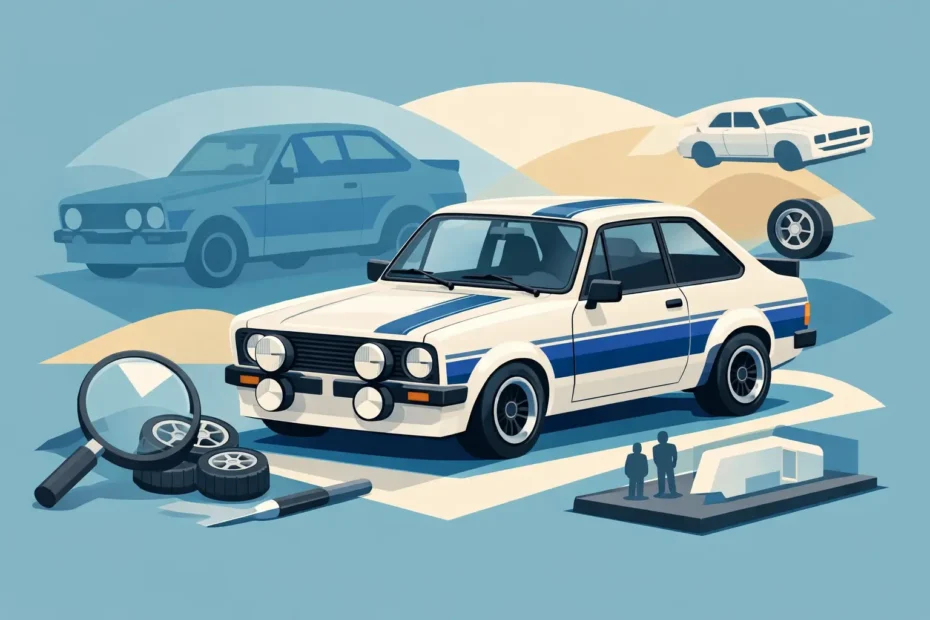
A proper Ford Escort Mk II RS1800 1:18 model has a job to do beyond simply looking good in a cabinet. It needs to capture the squat, purposeful shape of one of Britain’s most recognisable rally cars: the broad arches, upright glasshouse, short overhangs and competition-ready stance that made the Mk II Escort a favourite on demanding forest stages.
For many collectors, this is where scale modelling becomes personal. The RS1800 recalls the era of sideways rallying, famous driver pairings, service crews and cars that looked close enough to their road-going relatives to feel attainable. In 1:18 scale, those details have enough room to make a real impression, whether the model represents a period road car, a works-style rally machine or a specific competition livery.
Why the Mk II RS1800 remains a collector favourite
The Ford Escort Mk II arrived in 1975, but it was the RS1800 that gave the shape its lasting competition status. Developed for rallying, the RS1800 combined the Escort’s compact rear-wheel-drive chassis with Ford’s 2.0-litre BDA engine and serious motorsport intent. It became a defining car of late-1970s rallying, associated with names including Björn Waldegård, Hannu Mikkola and Ari Vatanen.
That history matters when choosing a diecast. An Escort is not merely another classic saloon on a shelf. It is a car with a recognisable motorsport story, and the best models communicate it through purposeful wheels and tyres, rally lamps, mudflaps, competition seats, roll-cage detail and authentic sponsor markings where applicable.
The Mk II also appeals well beyond dedicated rally collectors. Plenty of enthusiasts remember Escorts as everyday family cars, local club-rally machines or the subject of posters and motoring magazines. A detailed RS1800 lets those memories sit alongside the racing pedigree. That blend of familiarity and legend is difficult to beat.
What 1:18 scale brings to the display
A 1:18 model is large enough to reward a closer look. An Escort Mk II in this scale is usually around 22cm long, depending on the exact casting and bodywork. It is substantial without demanding the space of a much larger display piece, making it a natural centrepiece for a bookcase, desk, enclosed cabinet or motorsport-themed collection.
The larger scale gives manufacturers room to show features that can be simplified in 1:43 or 1:64. Look for separately fitted lamps, finely printed instruments, convincing seat belts, dashboard switches and delicate grille work. On rally versions, spare wheels, navigation equipment, roof vents and underbody protection may add further character.
Not every 1:18 release offers the same level of functionality. Some have opening doors, bonnet and boot, while others are sealed-body models designed primarily for exterior accuracy and clean panel lines. Neither approach is automatically better. Opening panels suit collectors who enjoy inspecting engines and interiors; sealed models can offer excellent value and a tidy, durable presentation. The important thing is knowing which type you are buying rather than assuming every large-scale diecast has moving parts.
Road car, rally car or a named event livery?
This is the first useful decision. A road-going RS1800-style model tends to suit a Ford performance collection, especially alongside Capri, Sierra Cosworth or Fiesta models. Its appeal lies in the body shape, period colours and the chance to appreciate the Escort without a busy competition finish.
A rally version makes a stronger statement. Auxiliary lights, decals and weathered-stage attitude give it immediate presence, particularly when displayed with other World Rally Championship icons. A named event livery can be especially satisfying if it represents a favourite rally, driver or championship season, but it is worth checking the vehicle number, event and driver pairing carefully. Small variations can matter a great deal to knowledgeable collectors.
There is no wrong route. A pristine road car may suit a carefully organised Ford cabinet, while a Monte Carlo or RAC Rally-style Escort can become the focal point of a broader rally display.
How to judge a Ford Escort Mk II RS1800 1:18 model
Accuracy is not limited to the badge on the boot lid. The Escort’s proportions are central to its charm, so start with the silhouette. The model should sit convincingly on its wheels, with the correct relationship between arch, tyre and body. An overly high ride height or wheels that appear too large can change the character of the car quickly.
Next, inspect the front end. The Mk II’s square-edged nose, grille, headlamps and bumper treatment are instantly familiar. On a rally replica, auxiliary lamps should look appropriately mounted rather than like an afterthought. Wheel design is another useful indicator. Period-correct alloys or competition wheels help the model feel rooted in its era.
Livery quality deserves a close look too. Decals should be sharp, evenly applied and free from obvious misalignment. Correct sponsor artwork and number plates can make a model more compelling, but collectors should remember that manufacturers may produce several versions of the same car. A particular driver, event, year or registration can change the model’s appeal and, in some cases, its collectability.
Interior detail often separates a good 1:18 model from a memorable one. Rally cars should feel purposeful inside, with competition seating, a roll cage where appropriate, a fire extinguisher or navigation equipment on more detailed releases. Road versions should retain the restrained, period-correct look that made the Escort such an everyday sight before its rally legacy took over.
Choosing a model for a collection or gift
For an established collector, the key question is usually where the Escort fits. It may complete a line-up of Ford rally cars, represent a missing World Rally Championship era or add a larger-scale counterpart to a favourite 1:43 release. Before choosing, consider scale consistency, available display space and whether the collection follows cars, drivers, events or manufacturers.
For a gift buyer, the Escort’s personal connection often matters more than technical specification. It could be a birthday present for someone who owned an Escort, followed rallying in the 1970s and 1980s, or simply loves classic Fords. A model linked to a favourite colour or competition livery can feel far more thoughtful than a generic sports car.
Condition is particularly important if the model is being bought as a collectable rather than simply for display. New releases are usually supplied in their original packaging, but boxes can still matter to collectors. If a model is vintage or pre-owned, check whether it includes its plinth, paperwork, mirrors, aerials or other small fitted pieces. Original boxes help with storage and can support long-term collector appeal, though a model bought to enjoy on the shelf should not be left hidden away solely for the carton’s sake.
At Darlington Diecast, browsing by scale, manufacturer and vehicle type makes it easier to narrow the search when several classic Ford or rally releases are competing for attention. For local collectors, seeing a 1:18 model up close can also be useful. Photographs tell part of the story; the model’s weight, paint finish and presence are easier to judge in person.
Displaying and caring for a 1:18 Escort
A model of this size deserves a little protection. Direct sunlight can fade paint and decals over time, while dust settles quickly around rally lamps, grille openings and wheel spokes. A glazed cabinet is ideal, but a sheltered shelf away from radiators and bright windows will also help preserve the finish.
Handle the model by its base or underneath the body where possible. Roof aerials, door mirrors, wipers and lamp pods are among the most vulnerable details. If panels open, use them gently and avoid forcing a bonnet or door that feels tight. For cleaning, a soft make-up brush or clean microfibre cloth is usually enough for routine dusting. Avoid household cleaning sprays, which can mark clear plastic or damage printed decoration.
A thoughtful display can give the Escort even more impact. Pair it with other rear-wheel-drive rally heroes, a period Ford service van, a small selection of rally figures or a framed event programme. Just avoid crowding the model. The Escort’s boxy shape and competition details are at their best when there is room to see them.
Whether you choose a clean road-going example or a decal-covered rally winner, give the Ford Escort Mk II RS1800 the space it has earned. It is a model that rewards a second look – and often starts a conversation before the cabinet door is fully open.