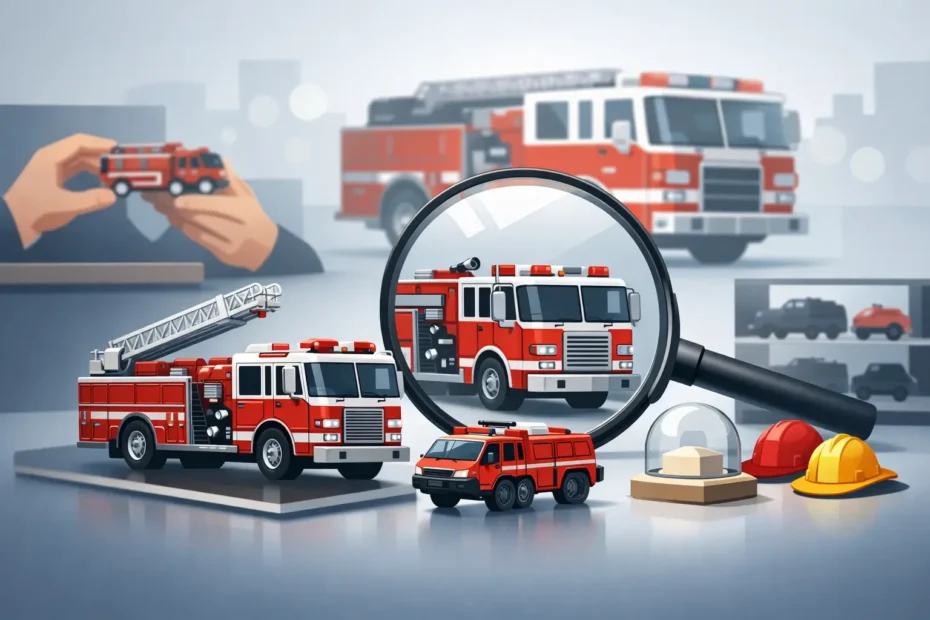
A good fire engine model does more than add a flash of red to a cabinet. It can recall a local brigade, a childhood fascination with blue lights, a family connection to the fire service or a landmark vehicle from British motoring history. That is why diecast fire engines for collectors deserve more thought than simply picking the first appliance that catches the eye.
From compact 1:76 models that sit naturally beside an OO railway layout to larger display pieces with opening compartments and finely printed brigade markings, there is plenty to enjoy. The right choice depends on what you want your collection to say, how much room you have and the level of detail you value most.
Start with the fire engine story you want to collect
Some collectors focus on a single era. Post-war appliances, including classic Bedford and Dennis vehicles, have a character that immediately suits a heritage collection. Their period equipment, rounded cab shapes and older livery styles make them as interesting as the emergency service history behind them.
Others prefer modern appliances, where the appeal lies in sharper bodywork, contemporary operational markings and vehicles recognised from the roads today. A current-style pumping appliance can look particularly effective alongside police cars, ambulances and rescue vehicles from the same period.
There is no rule that says a collection must follow one route. A chronological display, moving from an early municipal fire engine to a modern brigade appliance, tells a clear visual story. A regional approach can be just as rewarding, especially if you are drawn to a particular county, city or brigade. Collecting by manufacturer is another sensible path for those who appreciate consistent scale, finish and packaging.
The key is to give yourself a starting point. Without one, it is easy to buy attractive individual models that do not quite work together once they reach the shelf.
Scale matters more than many first-time collectors expect
Scale affects display space, level of detail, price and how easily a model fits with the rest of your collection. It is worth deciding early whether you are building a unified display or simply selecting favourite vehicles in different sizes.
1:76 scale for layouts and compact displays
A 1:76 fire engine is a natural choice for OO gauge railway enthusiasts. It can bring a station scene, industrial yard or town street to life without overwhelming the layout. These smaller models can still offer impressive printed detail, including registration plates, chevrons, brigade crests and equipment fittings.
They are also ideal where display room is limited. A row of 1:76 appliances can show the development of fire service vehicles across decades while taking up little more space than a few larger models.
1:43 scale for a classic diecast collection
For many collectors, 1:43 is the sweet spot. It is large enough to show cab interiors, ladders, hose reels and crisp decoration, but compact enough to build a varied collection in a cabinet. It also sits comfortably with many diecast cars, vans, buses and lorries in the same scale.
If you already collect 1:43 British vehicles, adding fire engines is an easy way to make a display feel more complete. A fire appliance parked beside a police car, ambulance and period bus creates the atmosphere of a real street scene rather than a line-up of unrelated models.
Larger scales for presence and detail
Larger diecast fire engines can become genuine centrepieces. Extra size allows for more visible equipment, deeper casting detail and a stronger sense of the original vehicle’s proportions. The trade-off is straightforward: they need more shelf space, and building a broad collection at a larger scale can cost more.
For a gift, a larger model often makes an immediate impression. For a long-term collection, however, it is wise to measure the intended display area before committing to a particular scale.
Look beyond the red paint
Two fire engine models may appear similar at first glance, yet their collector appeal can be very different. The best examples capture the details that make an appliance believable: accurate body shape, correctly positioned ladders, roof equipment, glazing, lights and authentic-looking markings.
Livery is especially important. Fire service vehicles have changed significantly over time, from traditional brigade lettering and simpler colour schemes to more visible modern markings. Models carrying a recognisable regional identity can be particularly meaningful, whether they represent a local connection or a service you remember seeing in everyday life.
Also look at the vehicle itself. Dennis, Bedford, Leyland and other familiar British names can shape a collection as much as the brigade markings. An appliance built on a chassis you recognise from a particular period often has greater personal appeal than a more generic model.
That said, absolute prototype accuracy and enjoyment are not always the same thing. A highly detailed specialist release may satisfy the experienced researcher, while a sturdier, more affordable model may be the better choice for a young enthusiast or someone beginning their first emergency vehicle display.
Condition, packaging and collectability
For collectors buying new diecast, original packaging helps protect a model from dust, sunlight and accidental damage. It can also matter if you may later trade, sell or pass on part of the collection. Keep boxes dry, clean and away from direct light, as faded or crushed packaging can reduce their appeal.
With vintage models, condition needs a more careful eye. Small paint chips, missing ladders, loose wheels and damaged decals are common, especially on older toys that have been enjoyed rather than stored away. None of these automatically makes a model a poor purchase. A well-loved vintage fire engine with honest wear can still be full of charm, particularly if it fills a gap in a period collection.
It depends on your aim. If you are seeking investment-grade condition, be selective and patient. If you are collecting for display and nostalgia, a minor flaw may be perfectly acceptable if the model is complete, fairly priced and difficult to find.
Build a display that gives every model room to work
Fire engines have visual presence, so a crowded shelf can hide their best details. Try arranging models by era, scale or brigade rather than lining up every appliance without a plan. A sequence of vehicles showing changing cab designs and equipment is often more engaging than a large mixed group.
Backgrounds can help, but restraint works best. A simple road base, depot scene or framed fire service photograph can give context without turning a collector’s cabinet into a toy display. If you combine models with an OO layout, consider where an appliance would realistically be positioned – near a station, civic building, industrial site or fire station – rather than placing it wherever there is an empty space.
Avoid prolonged direct sunlight, which can fade paintwork and printed markings. Dust regularly with a soft brush, and handle delicate aerials, ladders and mirrors carefully. Those small parts are often the first details to suffer when a model is moved in a hurry.
Diecast fire engines for collectors make thoughtful gifts
A fire engine model can be a much more personal gift than a general diecast car, particularly for a retired firefighter, a transport enthusiast or someone with a strong local connection. The safest choice is usually a familiar vehicle type in a manageable scale, rather than an obscure release chosen only for rarity.
If you know the recipient collects model railways, 1:76 is a practical fit. If they display cars and commercial vehicles in a cabinet, check whether they favour 1:43. When scale is unknown, a well-made model of a recognisable British appliance is often a sound starting point.
At Darlington Diecast, collectors can browse across scales and vehicle themes online or see selected models up close in the Darlington shop. For newcomers, that chance to compare size, detail and finish in person can make the first purchase much easier.
A fire engine collection is at its best when each model earns its place, whether through its history, craftsmanship or personal connection. Choose the appliance that makes you pause for a closer look – that is usually the one you will still enjoy seeing on the shelf years from now.