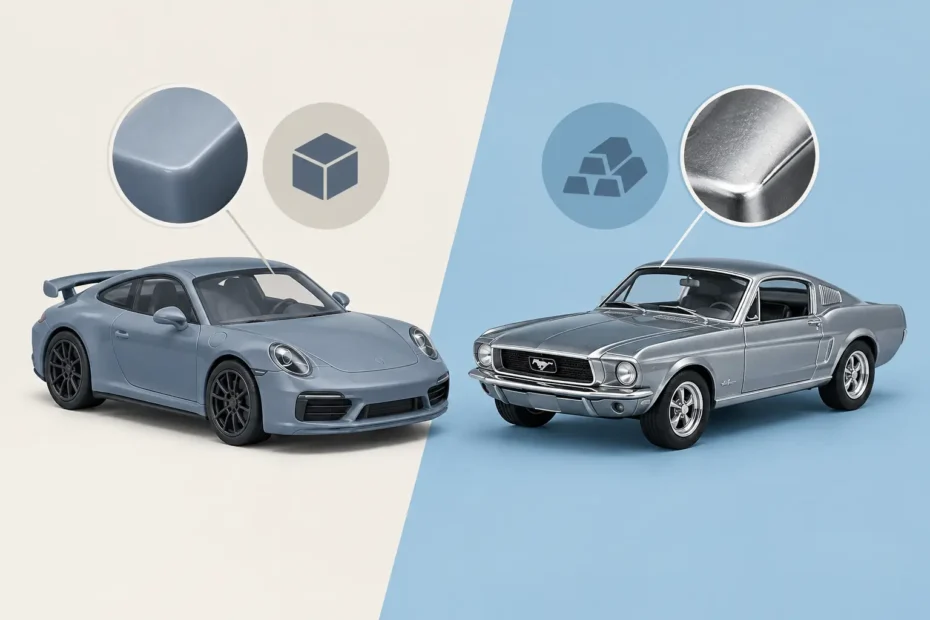
A 1:18 model can look superb in its box, but the material beneath the paint changes how it feels, how it displays and how you should look after it. The choice between diecast resin versus metal models is not simply a question of which is ‘better’. It is about the vehicle you collect, the level of detail you enjoy and whether you want opening parts, a reassuring weight or a sealed display piece with exceptionally fine shaping.
For collectors of classic British cars, modern supercars, motorsport machines, buses, lorries or emergency vehicles, both materials have a place on the shelf. Knowing the differences makes it much easier to buy with confidence – whether you are choosing your first detailed replica or adding a particular release to an established collection.
What is the difference between resin and metal models?
Traditional diecast models use a zinc alloy, often called zamak, for the main body or chassis. Molten alloy is injected into a mould under pressure, producing a durable metal casting that can be painted, assembled and fitted with separate components. Brands such as Corgi, Maisto and Bburago have long made metal models in this way, from accessible 1:64 vehicles to highly detailed 1:18 replicas.
Resin models are made from polyurethane resin poured or injected into a mould. The finished body is normally lighter than a comparable metal casting and is most often sealed, meaning the doors, bonnet and boot do not open. Resin is widely used for premium collector models, particularly in 1:18 and 1:43 scale, where a manufacturer wants to reproduce a limited-run car, an unusual racing version or very delicate bodywork.
The word ‘diecast’ is sometimes used casually for all scale vehicle models. Strictly speaking, resin is not diecast metal, but most collectors will understand what is meant when comparing the two types.
Diecast resin versus metal models: detail and accuracy
Resin’s biggest advantage is freedom of shape. A resin body can capture narrow panel gaps, slim pillars, complex spoilers, sharp vents and curves that may be difficult to release from a metal casting mould. That matters with low-volume supercars, modern GT racers and cars with dramatic aerodynamic bodywork. Fine photo-etched grilles, painted brake calipers and delicate tampo printing can give a quality resin model an impressive display presence.
Metal models can be just as attractive, but the manufacturing process brings practical limits. A diecast shell needs sufficient thickness and strength, especially if it includes opening panels. Older-style tooling can occasionally result in heavier shut lines around doors or bonnets. That does not automatically mean less accurate. A well-made metal model can have excellent proportions, crisp trim and a convincing paint finish, while also offering the pleasure of seeing the engine bay and interior.
Look beyond the body material when judging detail. At 1:43 scale, a well-applied livery, correctly printed number plates, realistic wheels and neatly fitted glazing may make more difference than whether the shell is resin or metal. At 1:18, opening features and visible interior detail become more significant because there is room to appreciate them.
Weight, opening parts and handling
Pick up a metal 1:18 model and you will usually notice the weight immediately. For many collectors, that solid feel is part of the appeal. Opening doors, bonnets and boots also make a metal replica more interactive, particularly for anyone who enjoys inspecting engines, dashboards and luggage compartments rather than displaying every model behind glass.
This is where metal is often the more satisfying choice for a hands-on collector or as a gift for an enthusiast who will want to explore the model. It can also be a sensible option for younger hobbyists, provided the model is suitable for their age and contains no fragile small parts.
Resin models are usually intended as display pieces. The sealed construction lets manufacturers concentrate on exterior form and avoids the compromises needed to create working hinges. They should still be handled carefully: mirrors, aerials, windscreen wipers and tiny spoilers can be very fine. A resin model is not a toy, and forcing a panel that appears to have a shut line can cause permanent damage.
There are exceptions. Some metal models have sealed bodies, while certain specialist resin releases may include limited opening features. Always read the individual product description rather than assuming every model follows the usual pattern.
Durability and long-term care
Metal has a reputation for toughness, and there is truth in that. The main casting is resilient and can tolerate careful handling well. Yet metal models are not indestructible. Door hinges can loosen, fine plastic trim can snap and paint can chip if a model is dropped. Older diecast can also suffer from zinc pest, a deterioration caused by impurities in some historic alloy castings. It is far less associated with modern quality production, but it is one reason condition matters greatly when buying vintage pieces.
Resin will not develop zinc pest, but it has its own requirements. Heat, direct sunlight and major temperature swings are unhelpful. Resin can warp if stored badly, particularly in a hot conservatory, loft or car. Prolonged strong sunlight may fade paint, decals and interiors on either material, so a cabinet away from a bright window is the safest home for valuable models.
Keep the original box, plinth and protective packaging where possible. They make moving and storing models much safer, and they can be important to collectors if you later decide to sell, trade or pass on part of your collection. Dust with a soft brush or clean make-up brush rather than rubbing with kitchen roll or using household polish.
Price, rarity and collecting value
Resin models often cost more than equivalent mainstream metal releases. That is partly due to smaller production runs and the level of finishing involved. Resin also allows manufacturers to make subjects unlikely to justify expensive metal tooling: a specific endurance racer, a limited-edition road car, a one-season livery or an obscure historic variant.
That scarcity can be appealing, but a limited edition is not a guarantee of future value. Collectability depends on the desirability of the subject, the reputation of the maker, accuracy, condition and how many people want the model when it is no longer available. Buy a model because it belongs in your collection, not solely because the box says it is limited.
Metal models cover a wider range of prices. There are excellent entry-level pieces for a themed shelf, premium models with opening features and long-running favourites with strong nostalgic appeal. A 1:76 Oxford Diecast vehicle, for example, may be ideal for an OO layout or a compact display, while a detailed 1:18 classic can become the centrepiece of a cabinet.
Which material suits your collection?
Choose a metal model if you value weight, opening doors and bonnets, regular handling or a broad, affordable collection across several scales. Metal is also a natural fit for collectors who enjoy older Corgi-style releases, working features and the mechanical character of a traditional diecast model.
Choose resin if your priority is precise body shape, a specific rare subject or a premium display model with particularly fine exterior details. It works brilliantly for collectors building a focused cabinet of supercars, racing cars or limited-run road vehicles where the silhouette and livery matter most.
Scale should influence the decision too. In 1:64 and 1:76, metal is common, practical and often excellent value. At 1:43, both materials can deliver superb miniatures, so research the exact release. In 1:18, the choice is more personal: metal often offers an experience, while resin often offers a sculpture-like finish.
If you are unsure, seeing the models up close is worthwhile. Compare the shut lines, paint, wheel detail, weight and interior finish rather than relying on material alone. At Darlington Diecast, collectors can do exactly that in store while browsing different brands and scales.
The best collection is not built from one material only. It is built from models that make you pause at the cabinet: the rally car you watched as a child, the police vehicle from your local force, the grand prix winner or the family car you remember from the driveway. Choose the version that does that subject justice, then give it a good place to be seen.